 Romford Electrical Services
Guide
What is an EICR?
An EICR is an Electrical Installation Condition Report: an inspection record showing whether a property's fixed wiring is safe and what needs fixing.
- Send a short enquiry
- Covering East London
- EICR and related services
An EICR is an Electrical Installation Condition Report: a formal record of an inspection and testing of the fixed wiring and electrical installation in a property. It tells you whether the installation is safe to keep using and lists any damage, wear or faults that need attention. Romford Electrical Services covers Romford and the wider East London area for EICR work.
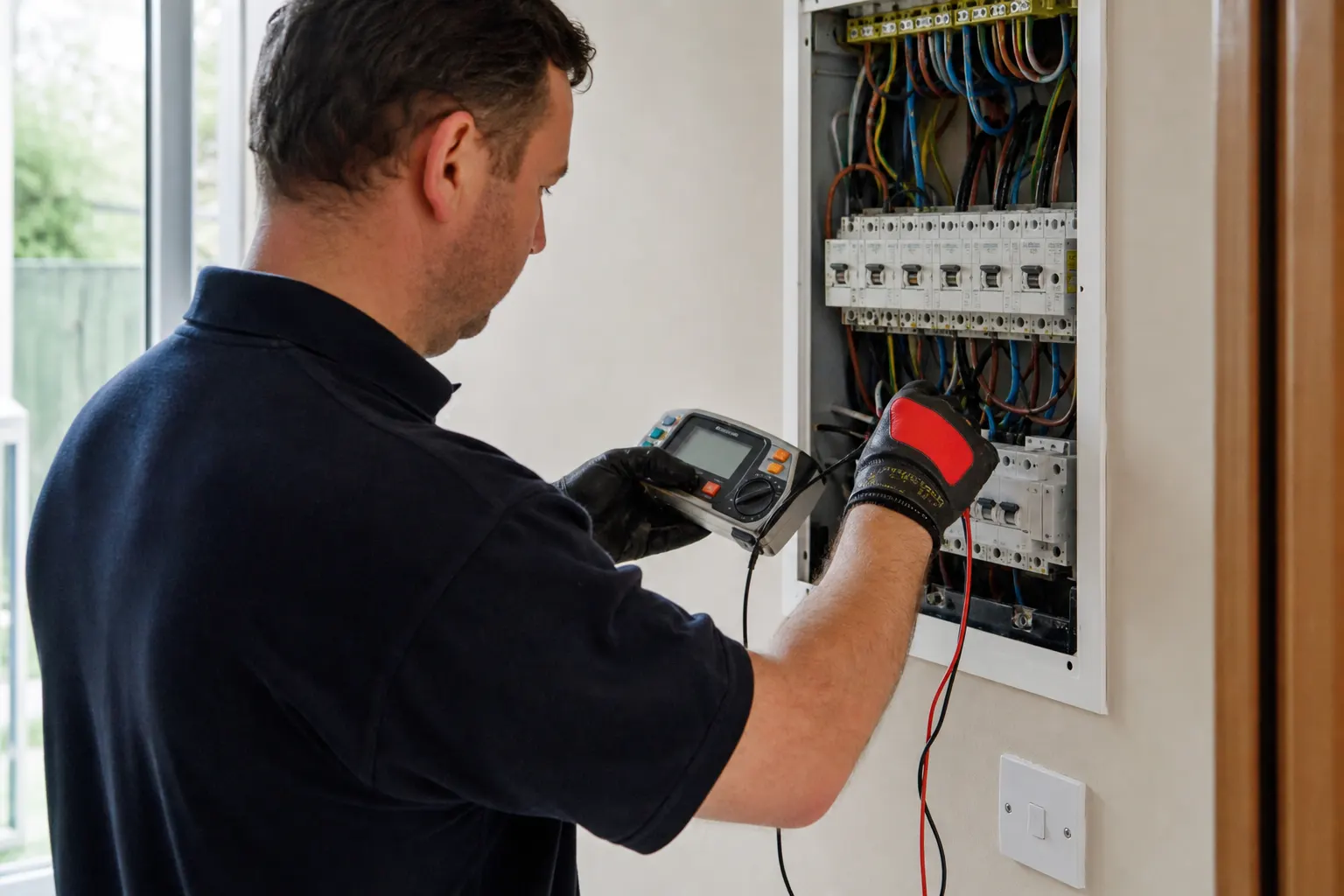
What an EICR actually is
You may hear it called an EICR certificate, an EICR check, an installation condition report or simply a condition report. They all mean the same thing. Strictly speaking it is a report rather than a pass-or-fail certificate, because it describes the condition of the electrical installation on the day it was inspected.
The purpose is safety. Wiring ages, connections loosen, and extra circuits get added over the years. An EICR shows whether the installation still meets the safety standards it is judged against, and whether anything poses a risk of shock or fire.
What the inspection covers
The electrician looks at the fixed parts of your electrical systems: the consumer unit (fuse box), the wiring, sockets, light fittings, switches and earthing and bonding. They carry out visual checks, then test circuits with specialist instruments to measure things like insulation condition and how quickly protective devices would react to a fault.
The inspection is not a test of your appliances. Kettles, TVs and washing machines are covered by separate portable appliance testing, which is a different job. An EICR is about the installation itself.
Some parts may be hard to reach. Furniture in front of sockets, locked rooms or loft and garage access can all limit what can be inspected, so clear access beforehand helps.
Who needs an EICR
Landlords are the group most often required to have one. Private landlords generally must make sure the electrical installation in a rented property is inspected by a suitably qualified person at regular intervals and must give tenants a copy of the report. The detail differs between the UK nations and rules can change, so check GOV.UK for the current position.
Homeowners are not usually required by law to have one, but it is sensible if you have just bought an older property, have never seen an inspection record, or notice warning signs such as flickering lights, warm sockets, tripping circuits or a very old fuse box. Employers and managers of some commercial premises also have duties to keep electrical installations safe.
If you are selling, there is generally no legal requirement to hand over an electrical safety certificate. Buyers or their solicitors may still ask for a recent report, and having one can avoid delays.
Understanding the results
The report grades each issue with a code. C1 means danger is present and immediate action is needed. C2 means potentially dangerous and urgent attention is required. C3 means improvement is recommended but it is not considered dangerous. FI means further investigation is needed because something could not be fully assessed.
The overall outcome is recorded as satisfactory or unsatisfactory. An unsatisfactory result usually follows any C1, C2 or FI observation. That does not mean the whole house needs rewiring. Often it means specific repairs, after which the electrician can confirm the work in writing. Landlords should deal with required remedial work within the timescale set by the rules and the report, so ask the electrician to explain what applies to you.
The report will also recommend when the next inspection should be due, based on the condition and type of the property.
How long it takes and what to expect
The time depends on the size of the property, the number of circuits and how easy everything is to reach. A small flat generally takes less time than a large house with extensions or outbuildings. Your electrician should be able to give you a sensible estimate once they know the property.
Power will need to be switched off for periods during testing, so plan around computers, fridges and anything else you cannot lose power to. Written results normally follow after the visit, once the readings have been compiled.
How EICR pricing works
Prices vary because the job varies. The main factors are the size of the property, the number of circuits and consumer units, how accessible the wiring is, the age and condition of the installation, and whether the electrician charges a fixed price or an hourly rate. Some add a callout fee. Evening or weekend appointments may be priced differently from weekday daytime ones.
Repairs found during the inspection are a separate matter. Any remedial work involves time and parts, and should be quoted for separately. To compare fairly, ask for a written quote that says what is included, and check that the electrician is registered with a recognised competent person scheme. You can ask to see their ID and proof of registration.
Common questions
How long does an EICR test take?
It depends on the number of circuits, the size of the property and access. A small flat is quicker than a large house. Ask the electrician for an estimate after they have details of your property.
What is an EICR certificate?
People use the term for the Electrical Installation Condition Report. It records the condition of the fixed wiring, lists any faults using observation codes and gives an overall satisfactory or unsatisfactory outcome.
How much does an EICR cost?
It depends on property size, circuit count, access, the electrician's pricing method and timing. Ask for a written quote that sets out what is included and how any extra work would be charged.
Can I sell my house without an electrical safety certificate?
There is generally no legal requirement to provide one when selling, but buyers may ask for a recent EICR. Rules can change, so check GOV.UK and ask your solicitor.
Useful sources
- NICEIC: The electrical contracting body, with a register to check an electrician.
- GOV.UK: electrical safety standards in the private rented sector: The official guidance for landlords, tenants and councils on electrical safety checks.