 Romford Electrical Services
Guide
How much does an EICR cost?
EICR cost depends on property size, circuits, age and access. Here is how pricing works and what to ask for in a written quote.
- Send a short enquiry
- Covering East London
- EICR and related services
The cost of an EICR depends mainly on the size and age of the property, the number of circuits and how long the inspection takes, so no single figure fits every home. The reliable way to find out is to ask an electrician for a written quote based on your actual property. Romford Electrical Services covers Romford and the wider East London area, and the points below will help you compare quotes properly.
Indicative eicr prices
Typical ranges, so you can sanity check a quote.
| Size or type | Indicative range |
|---|---|
| Electrical Installation Condition Report (EICR) | £120 to £250+ |
These are indicative ranges, not quotations, and nobody is bound by them. Scope, access and specification all move the price.
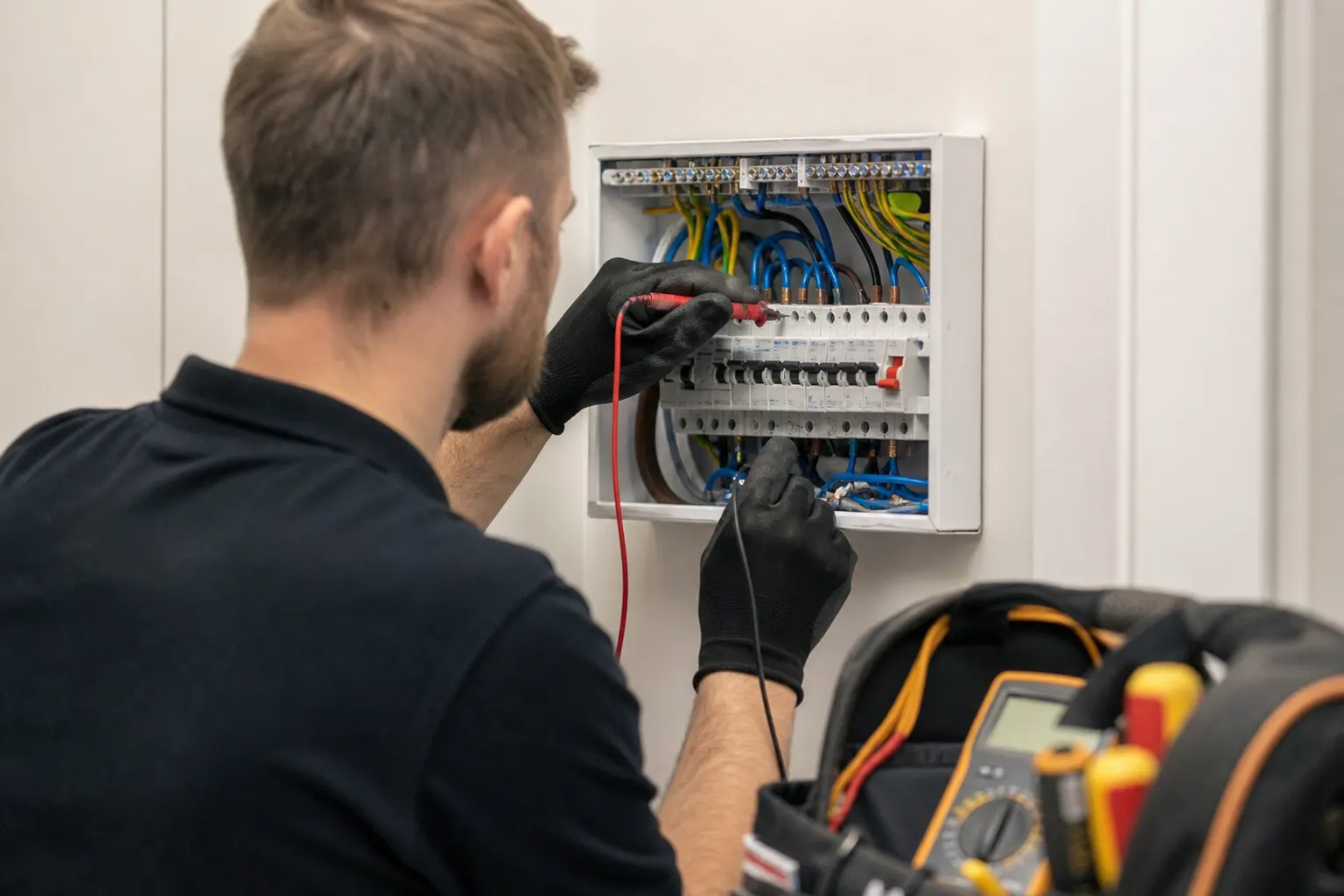
How EICR pricing usually works
An EICR is an electrical installation condition report. An electrician inspects and tests the fixed wiring and equipment in your property, then records the condition of the installation and any problems found. Because the work is mostly testing time, firms tend to price it in one of a few ways.
Some give a fixed price for a property of a certain type or size. Others price by the number of circuits or consumer units. Some charge by time, using an hourly rate or a day rate. Any of these can be reasonable, but they are not the same thing, so always check which one your quote uses and what it includes.
What moves the cost up or down
Property size is the first factor. A small flat has fewer circuits, sockets and lights to test than a large house, so the inspection is shorter. The number of circuits matters more than the number of rooms, because each circuit has to be tested individually.
Age and condition come next. Older properties often have mixed or altered wiring, older consumer units, or circuits that are hard to trace, and all of that adds time. Larger or older homes with extensions, outbuildings or a garage supply also take longer.
Access has a real effect. If the consumer unit is blocked, floors are fully fitted, or loft spaces and meters are hard to reach, the job slows down. Clearing access beforehand can help keep the time, and the quote, sensible.
Finally, timing and logistics can play a part, such as evening or weekend visits, or several units in one building. Ask whether any of these change the price.
Remedial work is a separate question
The inspection fee covers the inspection and the report. It does not usually cover fixing what the report finds. If the electrician records something as potentially dangerous or in need of urgent attention, you will need remedial work, and that is normally quoted separately once the faults are known.
This is why the cheapest inspection is not always the cheapest outcome. Ask how remedial work is priced, whether small fixes can be done during the visit, and whether you will get a written quote before any extra electrical work starts.
How long the inspection takes
Time is the biggest driver of cost, so it is worth knowing what to expect. Many average homes take a few hours, while larger or older properties can take longer, and a big house may need more than one visit. Power will need to be switched off to parts of the property for periods, so plan for that, especially if you work from home or have equipment that needs to stay on.
A proper electrical safety check involves visual inspection, then testing of circuits, earthing and bonding, and the consumer unit. If a quote seems to promise a very quick visit for a large property, ask what is being tested.
Questions to ask before you accept a quote
Ask for the quote in writing and check that it states what is included: the inspection, the written condition report, and any re-visit if faults are found. Ask whether the price assumes a certain number of circuits, and what happens if there are more than expected.
Ask who will carry out the testing and whether they are registered with a competent person scheme. You can ask to see ID and proof of registration. A normal electrician can do an EICR only if they are qualified in inspection and testing, which is a different skill from installing, so ask about that directly.
Be cautious about offers of a free electrical safety check. A quick look at your sockets is not the same as a full EICR, which needs time and test equipment.
When you may need one
An EICR is commonly needed by landlords, who have a legal requirement to keep the electrical installation safe and to have it inspected at set intervals, often at least every five years. Homeowners may choose one when buying or selling, after buying an older property, or simply for peace of mind. You are not generally stopped from selling a house without one, but a buyer or their surveyor may ask for it.
Rules and intervals can change, so check GOV.UK for the current position for your situation before you book.
Common questions
Can a normal electrician do an EICR?
Only if they are competent in inspection and testing. That is separate from installation work, so ask about their experience with condition reports and whether they are registered with a competent person scheme.
How long does an EICR test take?
Many average homes take a few hours, but larger or older properties take longer. The number of circuits and how easy the installation is to access make the biggest difference.
Can I sell my house without an electrical safety certificate?
You are generally not prevented from selling without an EICR, but a buyer may ask for one or request repairs. Check GOV.UK and ask your solicitor, as rules can change.
Why do two EICR quotes differ so much?
They may cover different things. One may assume fewer circuits, exclude the written report detail or leave out re-visits, so compare what is included, not just the headline price.
Useful sources
- NICEIC: The electrical contracting body, with a register to check an electrician.
- Citizens Advice: Free, independent advice on your rights when paying for work.