 Romford Electrical Services
Romford, East London
Commercial EICR Romford RM1
A commercial EICR is a formal check on the condition of the permanent electrical installation in a business property.
- Send a short enquiry
- Covering East London
- EICR and related services
Commercial EICR for Romford premises
Romford Electrical Services covers Romford, Hornchurch, Upminster, Gidea Park and Harold Wood. This page explains what the inspection involves, when to book one and how to read the result.
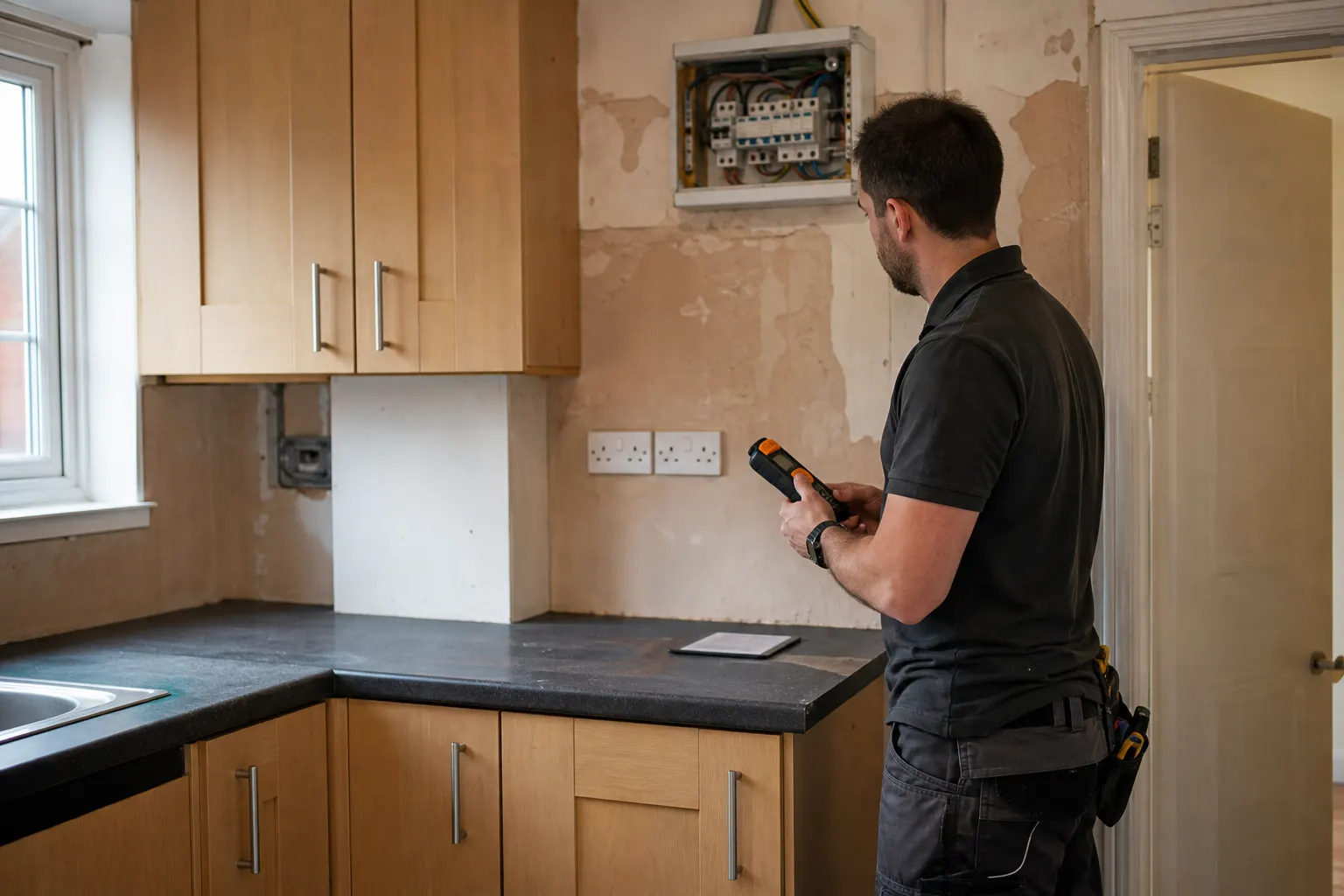
What happens, step by step
Every building is different, but a commercial EICR usually runs along these lines.
| Step | What happens |
|---|---|
| Enquiry | You send the enquiry form with the type of premises, its approximate size and any previous report. |
| Scoping and planning | The scope is agreed, including access to boards and whether the power needs to go off at a convenient time. |
| Inspection | The fixed installation is visually inspected for damage, wear and missing protection. |
| Testing | Electrical tests are carried out on the circuits, and parts of the supply may be switched off briefly. |
| Report | You receive a written EICR with an overall result and any observation codes. |
| Follow-up | If the report lists issues, any remedial work is discussed and agreed separately. |
The steps are general. The details depend on the size and layout of the premises and on what the inspection finds.
What a commercial EICR involves
EICR stands for electrical installation condition report. In commercial settings you will often hear it called fixed wire testing, because it looks at the permanent wiring of the building rather than anything you plug in. That means the consumer unit or distribution boards, circuit wiring, sockets, switches, lighting circuits, and the earthing and bonding that keep the system safe.
The inspector looks for damage, wear, overloaded circuits, poor connections and missing protection. They also carry out electrical tests to see whether the installation still performs as it should. Some of this needs parts of the supply switched off for a time, so it helps to plan around how your office, shop, workshop or unit operates.
Fixed wire testing is different from PAT testing. PAT testing checks portable appliances such as kettles, printers and extension leads. If you need both, say so in your enquiry so the scope is clear from the start.
When to book a commercial EICR
The most common reason is a planned, periodic inspection. Business premises need their electrical systems checked at regular intervals, and the report itself recommends when the next inspection should be due. If you cannot find your last report, that is a good prompt to arrange a new one.
Other good moments to book include:
1. Taking on a new lease or buying commercial premises, so you know the condition of the installation before you are responsible for it. 2. After an extension, refit or major change to the electrics. 3. When an insurer, landlord, mortgage lender or licensing body asks for a current report. 4. Before a change of use, for example turning a storage unit into a small office or workshop. 5. When you notice warning signs: breakers that keep tripping, flickering lights, warm or discoloured sockets, or a burning smell.
Employers and building owners have general duties to keep electrical systems safe. The rules can change, so check GOV.UK and the Health and Safety Executive for the current position, and ask your insurer what they expect.
Reading the report and what comes next
Once the inspection and testing are done, you receive a written report. It records what was inspected, what was found and an overall result of satisfactory or unsatisfactory. Any issues are listed with observation codes.
C1 means danger is present and urgent action is needed. C2 means something is potentially dangerous. C3 means an improvement is recommended. FI means further investigation is required. A report with C1 or C2 observations, or an FI, is normally unsatisfactory until those items are dealt with.
Keep the report somewhere safe. Insurers, landlords, tenants and enforcing authorities may ask to see it, and the next inspector will want to compare it with their findings. If you rent your premises out, a copy for the tenant is sensible. The same applies to any rental property that forms part of the building, such as a flat above a shop.
What affects the cost, and why repairs are separate
The price of a commercial EICR depends on the installation, not just the building. The main factors are:
1. The size of the premises and the number of circuits and distribution boards. 2. How easy it is to reach the boards, ceilings, risers and plant areas. 3. Whether power can be switched off during working hours or the work needs to be planned for quieter times. 4. The type of premises, since an industrial unit with three-phase supplies is a different job from a small shop. 5. The age and condition of the system, and whether earlier records and circuit schedules exist.
The inspection is one job. Repairs or upgrades the report recommends are another. The EICR tells you what condition the installation is in. It is not a repair visit, and fixing faults is separate work that is priced on its own once the findings are known. Some reports have nothing to put right. Others may point to jobs such as replacing a worn consumer unit or correcting a circuit. Ask for any follow-up work to be itemised, so you can see what is urgent and what can be scheduled.
Covering Romford and nearby towns
Romford Electrical Services serves commercial premises in Romford, Hornchurch, Upminster, Gidea Park and Harold Wood. That includes offices, retail units, workshops and small industrial units.
When you send an enquiry, it helps to say what type of premises it is, roughly how big it is, whether you have a previous report, and whether there are times when the power cannot be off. If you also need a landlord EICR or an EICR for a sale or purchase, mention that too. Use the enquiry form on this page to get started.
Questions about this
Is fixed wire testing the same as a commercial EICR?
In everyday use, yes. Fixed wire testing is the common name for inspecting and testing the permanent wiring of a building, and the EICR is the report that records the results.
Does a commercial EICR include PAT testing?
Not normally. An EICR covers the fixed installation, while PAT testing covers portable appliances. If you want both, say so when you enquire so the scope is agreed.
What happens if my commercial EICR is unsatisfactory?
It means observations such as C1, C2 or FI need attention. The remedial work is separate from the inspection. Once it is finished, the installation can be re-checked and the report updated.
How often does a commercial property need an EICR?
It depends on the type of premises, how it is used and the condition found at the last inspection. The report recommends a date for the next one. Check GOV.UK and HSE guidance, and ask your insurer, for the current position.
What you get
Commercial and domestic EICRs
Alongside commercial EICR work, the services include landlord EICRs and EICRs for buying or selling, so one enquiry can cover more than one property.
Follow-up work is available
Consumer unit upgrades and general electrician work are also offered, so any faults an inspection finds do not have to be passed to someone else.
Serving Romford and nearby towns
Romford Electrical Services serves Romford, Hornchurch, Upminster, Gidea Park and Harold Wood across East London.