 Romford Electrical Services
Romford and East London
Landlord EICR Romford RM1
A landlord EICR is an electrical installation condition report on a rental property.
- Send a short enquiry
- Covering East London
- EICR and related services
Landlord EICR for rental properties in Romford
It records the state of the fixed electrics and shows whether they are fit to carry on in use. Romford Electrical Services covers Romford, Hornchurch, Upminster, Gidea Park and Harold Wood. This page explains what the inspection involves and when to send an enquiry.
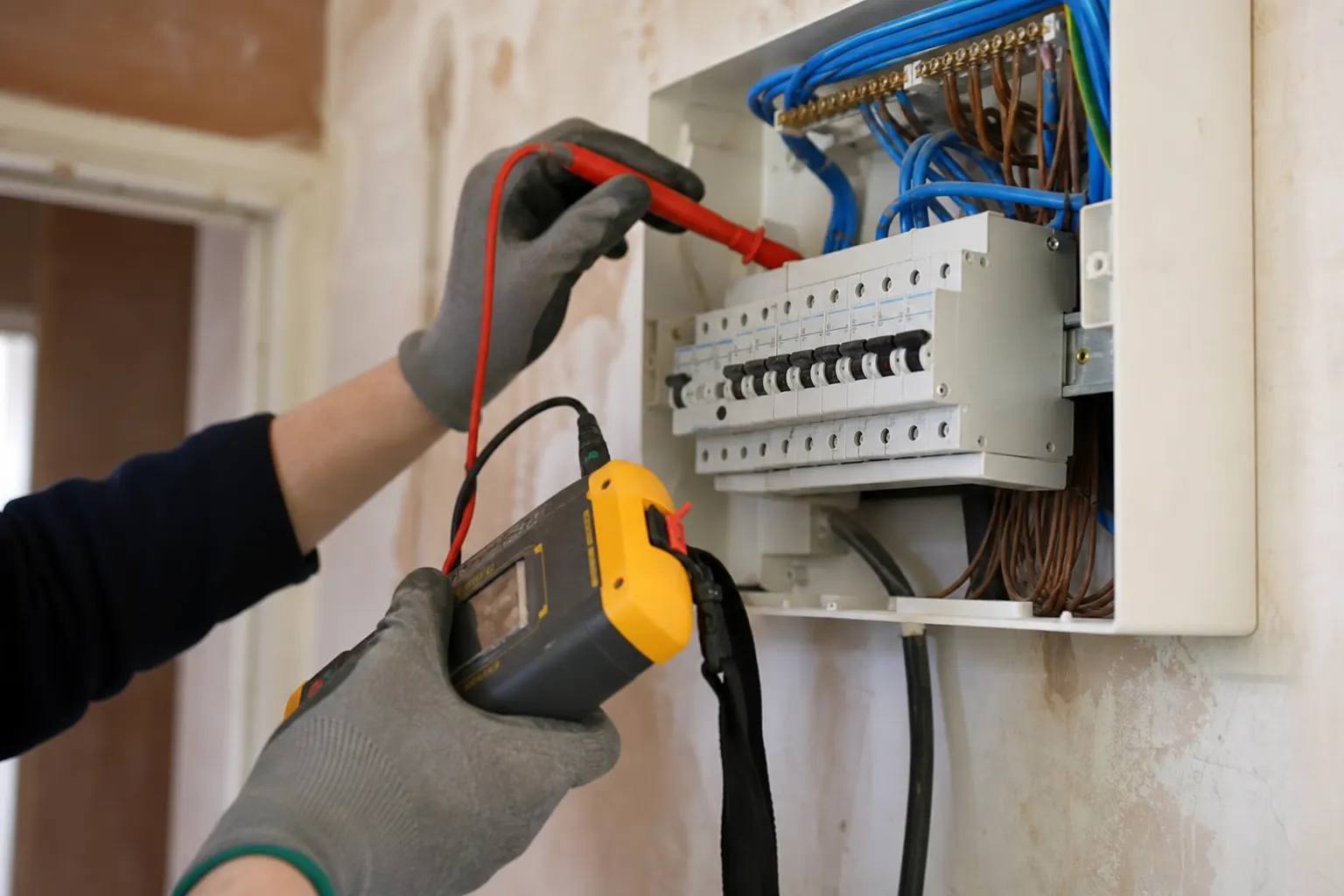
What happens, step by step
A typical landlord EICR runs like this, though details vary from one property to another.
| Step | What happens |
|---|---|
| 1. Enquiry | You send the enquiry form with the property address, its type and size, and whether it is occupied or empty. |
| 2. Arrangements | A suitable visit is agreed. If the property is let, the tenants are told in advance because the power will be switched off for parts of the inspection. |
| 3. Inspection and testing | The fixed electrical installation is checked visually, and circuits are tested one by one. |
| 4. Report | The findings are written up as an electrical installation condition report, with an overall result of satisfactory or unsatisfactory and any coded observations. |
| 5. Next steps | If remedial work is needed, it is discussed and priced separately from the inspection. Once it is done, the paperwork can be updated. |
Keep a full copy of the report for your records and give tenants a copy. Check GOV.UK for the current rules on what landlords must provide.
What a landlord EICR involves
An EICR is a report on the electrical installation condition of a property. The fixed wiring is inspected and tested: the consumer unit (fuse board), circuits, sockets, light fittings, switches, earthing and bonding. It is not a test of your tenants' appliances. It looks at the permanent electrical system that belongs to the building.
The inspection has two parts. The first is a visual check for damage, wear, overheating, loose fittings and anything that does not look right. The second is testing, which means isolating circuits and taking measurements to see how the wiring performs. Parts of the supply will be switched off for a while, so tenants should be told in advance.
Many people call the result an EICR certificate or a safety certificate. Strictly it is a condition report. It lists what was inspected, what was found, and any observations. It ends with an overall result of satisfactory or unsatisfactory. Keep the full report, not just the front page, because it is the record you may be asked to show.
Satisfactory or unsatisfactory: what the result means
Each issue found is given a code. C1 means danger is present. C2 means potentially dangerous. C3 means improvement is recommended. FI means further investigation is needed. As a general rule, a report with C1, C2 or FI items comes back as unsatisfactory. C3 items on their own do not usually cause a fail, but they are worth reading, because they point to things that may become problems later.
An unsatisfactory result is not unusual for older rental properties, and it is not the end of the matter. It tells you what needs attention. Once the necessary work is done, the installation can be checked again and the paperwork updated. Do not ignore an unsatisfactory report. If you have a copy showing unresolved faults, you are in a weaker position with tenants and with the local housing authorities.
How often and when to arrange one
Landlord EICRs are not a one-off. The rules for private rented homes expect the electrical installation to be inspected and tested at regular intervals by a competent person, and tenants must be given a copy of the report. The usual maximum gap is five years, but the report itself can recommend a shorter period if the installation is in poor condition. Rules can differ between England, Scotland and Wales, and regulations can change, so check GOV.UK for the current position before relying on any summary, including this one.
It makes sense to send an enquiry:
Before a new tenancy begins, so any faults are dealt with while the property is empty.
When your existing report is getting close to its review date. Check when your EICR last took place and what period it gave.
After major work such as a rewire, an extension or a new consumer unit, if you are unsure whether the report still reflects the property.
If a tenant reports tripping circuits, scorch marks, buzzing sockets or flickering lights.
If you have just bought a rental property and have no report or paperwork from the previous owner.
What affects the cost of a landlord EICR
The cost depends mainly on the size and layout of the property. More circuits, more rooms, more outlets and more than one consumer unit all mean more inspection and testing. Access matters too. Furniture in the way, locked areas, outbuildings or a garage with its own supply can add to the work. The age and condition of the installation also play a part, because older or altered wiring can take longer to trace and test.
The cost of the inspection is separate from any follow-up work. The EICR tells you what condition the installation is in. If it finds faults, fixing them is remedial work, and that is a separate job with its own cost. Remedial work might be as small as replacing a damaged fitting, or as large as upgrading a consumer unit. Romford Electrical Services also lists consumer unit upgrades and general electrician work, but how much of that you need depends entirely on what the report finds. Ask for any remedial work to be itemised, so you can see exactly what each item relates to in the report.
Tenants, councils and unsafe electrical work
If you are a tenant and you think the electrics are unsafe, tell your landlord in writing and keep a copy. If nothing is done, you can contact the environmental health or private sector housing team at your local council. Local housing authorities have powers to deal with rented homes that are not safe. Shelter and Citizens Advice can explain your options.
If you are worried about electrical work that someone has carried out, start with the person who did it and ask them to put it right. If they will not, check whether they belong to a competent person scheme and use that scheme's complaints process. Your local council's building control team can also advise. In an emergency, such as burning smells or sparking, switch off the supply if it is safe to do so and contact the emergency services.
Questions about this
How often should an EICR be done?
For rental properties, the usual maximum interval is five years, though the report may recommend a shorter period if the installation is in poor condition. An EICR is also sensible at the start of a new tenancy or after major electrical work. Rules can change, so check GOV.UK for the current position.
How much would an EICR cost?
It depends on the size of the property, the number of circuits and consumer units, how easy the areas are to reach, and the condition of the installation. Any repairs the report calls for are a separate cost from the inspection itself. Use the enquiry form with some details about the property so the work can be discussed.
How do I report unsafe electrical work?
Tenants should tell their landlord in writing first. If nothing happens, contact the private sector housing or environmental health team at the local council. For poor work by an electrician, ask them to put it right, then use the complaints process of any scheme they belong to. If there is immediate danger, turn off the supply if it is safe to do so and contact the emergency services.
Can I sue my landlord for not having a gas safety certificate?
That is a gas question rather than an electrical one, and this page cannot give legal advice. Landlords do have separate duties around gas safety, and tenants who are concerned can speak to Shelter, Citizens Advice or the local council. Check GOV.UK for the current rules on landlord responsibilities.
What you get
A dedicated landlord EICR service
Landlord EICR is one of the services listed by Romford Electrical Services, alongside EICR for buying or selling and commercial EICR.
Covers Romford and nearby towns
Enquiries are welcome for rental properties in Romford, Hornchurch, Upminster, Gidea Park and Harold Wood.
Related electrical work is on the list
If a report points to consumer unit upgrades or other repairs, those are services Romford Electrical Services offers, and they are quoted separately from the inspection.